Current Spotlights
July 2026
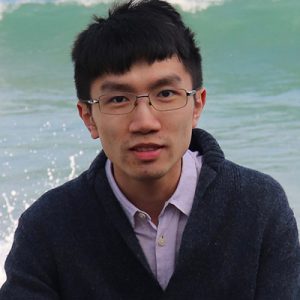
Ammi Chang
Ammi Chang is a PhD student studying Literacy & Language Education in the Department of Curriculum and Instruction.
Read more about Ammi Chang
Where are you from, and what did you do prior to your PhD program?
I worked as a research staff member at a government educational policy institute in South Korea after completing my master’s degree in educational psychology.
What are your research interests and what led to your interests?
My research interests are student motivation and teacher education. I believe teachers play a pivotal role in fostering students’ motivation to learn. Currently, I am focusing on English and literacy teachers, exploring ways to enhance students’ learning experiences in their classrooms.
Why did you choose Purdue and your area of concentration?
Purdue has outstanding scholars and faculty in education. I chose English Education because I want to apply psychological theories to better understand and enhance practices in K–12 English classrooms.
Where do you hope to be in five years?
I would like to apply my theories and recommendations in K–12 classrooms. I hope that the studies and research projects I am conducting will contribute to achieving that goal.
What advice do you have for other new fellow graduate student researchers?
Don’t be afraid to work beyond your scope and seek out opportunities to learn and collaborate with your colleagues!
What do you like to do in your spare time?
I like walking around campus and hitting the CoRec for a workout.
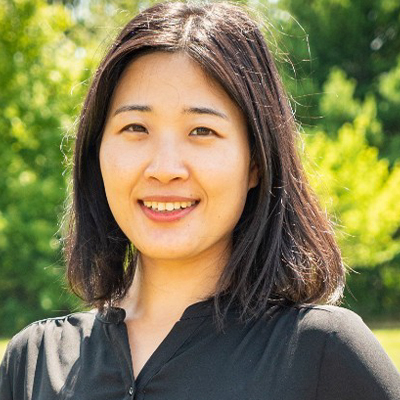
June 2026
Muhammad Taimur Sabih
Muhammad Taimur Sabih is a second-year PhD student studying Language & Literacy in the Department of Curriculum and Instruction.
Read more about Muhammad Taimur Sabih
Where are you from, and what did you do prior to your PhD program?
I am a Pakistani-Kiwi (New Zealanders are called Kiwis). I have a Master’s in English Literature from Greenwich University (Pakistan) and a Master’s in TESOL from Victoria University of Wellington (New Zealand).
What are your research interests and what led to your interests?
Some of my research interests are Communicative Language Teaching (CLT), English Language Teaching (ELT), Teaching English to Speakers of Other Languages (TESOL), curriculum designing, and bilingual education. I firmly believe that curricular changes can bring about massive changes in any society, and language education can be used to bring people closer.
Why did you choose Purdue and your area of concentration?
When I went through the profiles of some of the scholars at Purdue, I could tell that I’d be able to find the right sort of guidance at Purdue. Second, Purdue is a great name to have on one’s CV.
Do you have any prior research experience?
Yes, I converted my Master’s dissertation into a research article and am waiting for it to be published. I also got an opportunity this semester in one of my courses to write a book review which was published recently in the International Journal of Bilingual Education and Bilingualism.
Where do you hope to be in five years?
I have always wanted to be a researcher – and a teacher too – so, I am definitely going to be in academia.
What advice do you have for other new fellow graduate student researchers?
If you are passionate, you’ll make it.

May 2026
Maria Regina Jaga
Maria Regina Jaga is a first-year PhD student studying Curriculum Studies in the Department of Curriculum and Instruction.
Read more about Maria Regina Jaga
Where are you from, and what did you do prior to your PhD program?
Timor Island, Indonesia. Prior to my doctoral studies, I served as a lecturer at Widya Mandira Catholic University in Kupang, East Nusa Tenggara, focusing on innovative teaching methods and was involved in the BIPA (Indonesian Language for Foreign Speakers) Program. My research interests include curriculum development, cultural studies in education, language, and children’s learning experiences, particularly in Indonesia, aiming to bridge academic research with practical applications that can benefit learners in diverse cultural contexts.
What are your research interests and what led to your interests?
My research interests focus on curriculum development and cultural studies in education, particularly integrating traditional games and local stories into learning to promote cultural continuity and children’s development, stemming from my twelve years of teaching experience using Multiple Intelligence approaches and culturally based learning media. I am passionate about developing culturally responsive and inclusive curricula that consider the social, cultural, and political dimensions of education, with a particular emphasis on how traditional games and local stories can serve as effective tools for achieving learning objectives while preserving cultural heritage. My interest in early childhood education explores how children’s learning experiences are shaped by parental beliefs and cultural models, and how these influence their social interactions with peers and teachers, especially in the context of Eastern Indonesia.
Why did you choose Purdue and your area of concentration?
I chose Purdue’s Curriculum and Instruction program because of its strong emphasis on interdisciplinary approaches to learning, teaching, and development, with a focus on cultural, political, and economic dimensions in education that align perfectly with my research interests in cultural preservation through education. The program’s commitment to social justice, multiculturalism, and international perspectives strongly resonates with my goal of integrating traditional games and local stories into education to promote cultural continuity and youth development in Eastern Indonesia, particularly in East Nusa Tenggara (NTT).
Do you have any prior research experience?
I have research experience in education and language development, with studies ranging from using Photo Story to enhance English speaking skills through South Amarasi folklore exploration to implementing Superbook Media for language and motor skills development for young learners. My research interests span across multiple areas including classroom behavior, innovative teaching approaches using Multiple Intelligence in writing and storytelling, educational technology during COVID-19, and public space communication through graffiti and pronunciation studies. Currently, I am engaged in three significant projects: a water source revitalization program, an infrastructure development initiative, and research on multicultural education’s impact on character formation in Christian theological schools in South Central Timor.
Where do you hope to be in five years?
In five years, I hope to make significant contributions to the development and implementation of the Kurikulum Merdeka based on local wisdom for primary education in Indonesia. After completing my doctoral program at Purdue, I plan to apply my acquired knowledge and skills to develop curricula that honor local wisdom while meeting modern educational standards. I also aspire to collaborate with educators and researchers, both nationally and internationally, to create positive changes in Indonesia’s educational system, particularly in integrating local cultural values into educational practices.
What advice do you have for other new fellow graduate student researchers?
Based on my background in teaching and research experience in multiple intelligence approaches and cultural studies, I advise new graduate student researchers to actively engage in cross-cultural educational research opportunities and build collaborative networks that bridge theoretical knowledge with practical applications, particularly in areas of curriculum development and cultural preservation in education. I also encourage utilizing the program’s emphasis on social justice, multiculturalism, and global issues to develop research that can make meaningful contributions to educational practices, especially in integrating local wisdom and cultural values into modern educational frameworks.
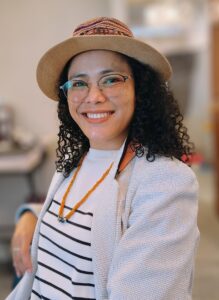
April 2026
Samet Baydar
Samet Baydar is a fifth-year PhD student studying Learning Design & Technology in the Department of Curriculum and Instruction.
Read more about Samet Baydar
Where are you from, and what did you do prior to your PhD program?
I am from Turkey. I worked at a Japanese manufacturing company in Alabama as a Japanese/English (and English-to-Japanese) translator/interpreter after finishing my MA in Japanese Pedagogy at Purdue.
Why did you choose Purdue and your area of concentration?
My academic advisor, Dr. William Watson, is one of the leading scholars in my research topic: personalized learning. This was the main motivation for choosing Purdue for my PhD program in learning design and technology.
What are your areas of research interests and what led you to them?
My research area is focused on various dimensions of personalized learning, such as motivation, self-efficacy, attitudinal learning, and self-regulation skills. These constructs are crucial for guiding emerging technologies that aim to support each learner in achieving their maximum potential.
Do you have any prior research experience?
Yes, during my PhD program I have co-authored a publication about a virtual-reality software technical review, and an experimental study focusing on learners’ perceptions of computer assisted feedback in Japanese courses. Research on different topics helped me understand what my focus will be in my near- to mid-term research agenda.
Where do you hope to be in 5 years?
I want to be a successful researcher/faculty member at an R1 university with a tenure track position in a learning design or instructional design program.
What advice do you have for other new fellow graduate student researchers?
I think starting to focus on research and working to publish papers brings a mature researcher mindset. So, I can suggest not waiting until the second half of their program to feel ready. Practicing research prepared me more than my mental preparation did. Do not hesitate to reach out to your advisor, other faculty members (which I truly believe makes us so lucky to have such supportive faculty in the LDT program), or your cohort to initiate a research idea or consult about research.
What do you like to do when you need a break from your research?
I take a walk, ride my bike, or play video games.
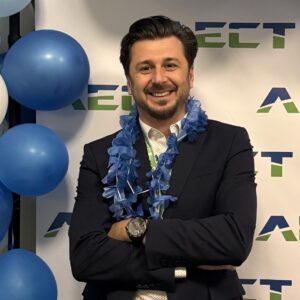
March 2026
Nivedh Jayanth
Nivedh Jayanth is a second-year doctoral candidate studying Science Education in the Department of Curriculum & Instruction.
Read more about Nivedh Jayanth
Where are you from, and what did you do prior to your PhD program?
I’m from Bangalore, India. Before I started the PhD, I worked at an international school where I taught Chemistry and served as HoD for the critical thinking courses. I was also an active performer and music educator, singing with a band and a choir.
What are your areas of research interests & what led to your interests?
At its broadest, my research interest is in how science education equips students with critical thinking skills and how they transfer outside the classroom. This stems from my experience teaching courses in both Chemistry and critical thinking. I am also interested in how science teachers develop their identity and support students developing their identity in science. As a chemistry teacher specifically, I have also been curious about how students learn abstract chemical models, the challenges they face therein, and how teachers support them through that process.
Why did you choose Purdue and your area of concentration?
I’ve always wanted to understand the why behind what my fellow science teachers and I did, and how we could make the experience of learning science more engaging, rigorous and enjoyable. With its long history of global engagement, top-notch faculty, and excellent research track record, Purdue was a very easy choice to help me acquire the knowledge, skills, and attitude to research science education.
Do you have any prior research experience?
I do not have research experience in education, but I did work at a nanomaterials lab for a year before I became a full time teacher where I was engaged in material science research.
Where do you hope to be in five years?
In five years I hope to have finished my PhD and working to better understand the science education landscape of India and engaging in initiatives to support teachers improve their practice.
What advice do you have for other new fellow graduate student researchers?
Talk to people! You never know where a casual conversation may lead and what doors it may open for you. And make sure you keep time to do the things that bring you joy!
What do you like to do when you need a break from your research?
I listen to music often while going on a long walk. I enjoy playing video games (single player only!) I enjoy reading fiction, especially books from the genres of fantasy and magic realism.
February 2026
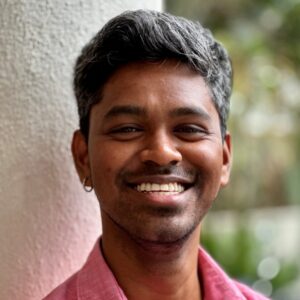
Yuxiao Zhang
Yuxiao Zhang is a fifth-year doctoral candidate studying Educational Psychology & Research Methodology in the Department of Educational Studies.
Read more about Yuxiao Zhang
Where are you from, and what did you do prior to your PhD program?
I am from Yunnan, China. Before starting my PhD program at Purdue, I worked as a Research Assistant in Hong Kong for two years.
What are your research interests and what led you to them?
My research focuses on developing and applying quantitative methods in educational and psychological research. Recently, my work has centered on integrating text data into psychometric research, using approaches such as topic modeling and deep learning language models (transformer). I am also interested in applying advanced methods, such as cognitive diagnostic models and structural equation modeling, to address substantive questions in education. My interest in text analysis was sparked during my Research Assistantship on a USDOE Javits grant project (PI: Dr. Nielsen Pereira), where I worked with students’ rich open-ended responses.
Do you have any prior research experience?
Yes, before joining Purdue I conducted research at the University of Hong Kong, where I worked on projects related to digital literacy assessment and carried out statistical and psychometric analyses.
Where do you hope to be in 5 years?
In five years, I hope to be working as a psychometrician or research scientist in industry, or serving as a faculty member at a research-intensive university, continuing to advance methodological innovations in educational statistics and measurement.
What advice do you have for other new fellow graduate student researchers?
The world is constantly changing. Stay curious, keep learning, and continuously update our skills to adapt and thrive.
What do you like to do when you need a break from your research?
I play table tennis and go hiking.