Indiana, federal judges invited to help BFTF learn about American justice system
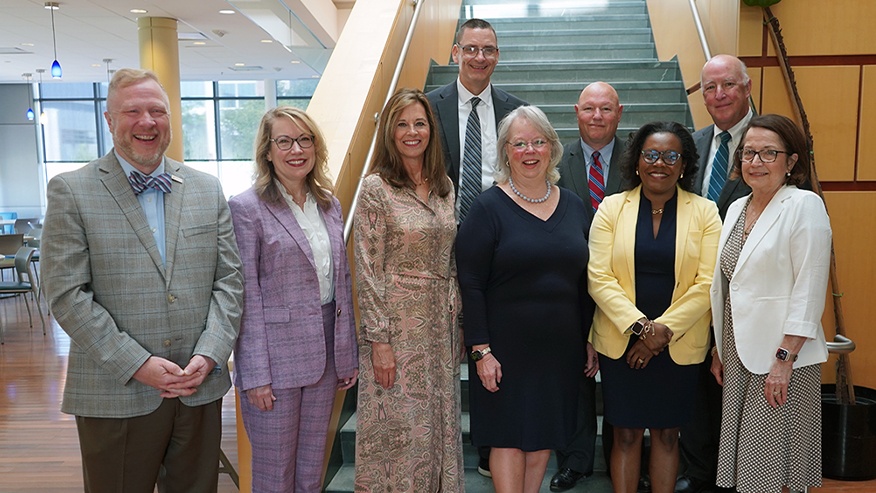
Indiana lawyers and judges visited the Benjamin Franklin Transatlantic Fellowship program at Purdue on July 1, interacting with the Fellows and discussing constitutional law and how they uphold it. (All photos: Purdue University/DeEtte Starr)
(Front row, l to r) Charles Dunlap, Hon. Dana Kenworthy; Hon. Elizabeth Tavitas, Sharon Jackson, Hon. Doris Pryor,
and Hon. Loretta Rush; (Back row, l to 4) Hon. Peter Foley, Hon. James Sweeney, and Hon. Mark Massa
Have you ever met an American judge or state supreme court justice outside of a courtroom? In July, 34 American and European teenagers had that opportunity through Purdue University’s College of Education.
The students are participants in the Benjamin Franklin Transatlantic Fellowship (BFTF), a U.S. Department of State program that brings together intellectually curious high school students from Europe and the United States for a four-week exchange at Purdue (June 23–July 21, 2026).
Purdue is the only university in the nation to host the BFTF program. It is directed by Anatoli Rapoport, professor of social studies education, and assisted by Asta Balkutė (PhD ’11), upper school principal at Vilnius International School in Lithuania and a College of Education alumna, and Jeff Spanke (PhD ‘15), associate professor of English and director of English Education at Ball State University.
The Purdue College of Education has hosted BFTF since 2013. According to Rapoport, interactions with Indiana judges are consistently among the program’s most popular activities.
“The legal system in every country is a ‘terra incognita’ for many people, particularly young citizens,” Rapoport said. “Meeting judges, including the chief justice and Indiana Supreme Court justices, helps students see that judges are not distant figures, but people who face difficult decisions while setting aside personal and political views.”
The Fellows spent three weeks attending lectures and activities on Purdue’s West Lafayette campus, living in a residence hall for two weeks and with local host families for nine days. They also visited Indianapolis, Chicago, Philadelphia and Washington, D.C., to learn more about American culture, politics and history.
This year’s cohort included 34 students from 22 European countries and 11 students from the U.S. The 16- to 18-year-olds are among the top students in their countries, share their cultures with one another and participate in both educational and recreational activities.
From June 29 to July 1, the Fellows explored constitutional law and the American legal system through discussions with Indiana and federal judges, state bar association representatives, a special agent in charge of the FBI Indianapolis Field Office, civic leaders, and BFTF faculty.
Guests included:
Hon. Loretta Rush (Chief Justice, Indiana Supreme Court)
Hon. Peter Foley (Judge, Court of Appeals of Indiana)
Sharon Jackson (retired Deputy General Counsel for Governor Eric Holcomb)
Hon. Dana Kenworthy (Judge, Court of Appeals of Indiana)
Hon. Mark Massa (Justice, Indiana Supreme Court)
Hon. Doris Pryor (Judge, U.S. Court of Appeals for the Seventh Circuit)
Hon. James Sweeney (Chief Judge, U.S. District Court for the Southern District of Indiana)
Hon. Elizabeth Tavitas (Chief Judge, Court of Appeals of Indiana)
Charles Dunlap (President & CEO, Indiana Bar Foundation)
Robert S. Leming, Former National Director, We the People: The Citizen and the Constitution
Timothy O’Malley, Special Agent in Charge, FBI Indianapolis Field Office
BFTF’s legal overview experience culminated in a scripted mock legislative hearing focused on the Fourth Amendment’s protections against unreasonable searches and seizures and weighing individual rights against school safety concerns. After the hearing, students discussed the case and its verdict.
The Fellows made short presentations to the judges, addressing how the Fourth Amendment should apply in the internet age and in complex public-school security situations. Judges provided feedback and answered questions about justice, legal careers, professional qualities, discrimination, security concerns and memorable experiences from the bench.
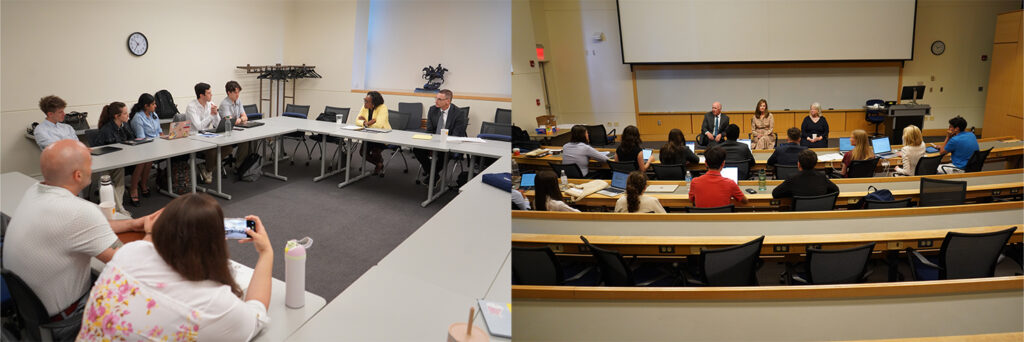
(left photo) Hon. Doris Pryor and Hon. Peter Foley; (right photo) Hon. Mark Massa, Hon. Elizabeth Tavitas, and Sharon Jackson
Several judges said they pursued law to promote justice and help others.
“Justice was the reason I wanted to go to law school, to have justice and to see justice done,” said Judge Tavitas.
Judge Foley emphasized the importance of remembering the people behind each case, noting that judicial decisions have lasting impacts on lives.
When asked about gender discrimination, Chief Justice Loretta Rush acknowledged experiencing it but said she focused instead on preparation and performance. Rush became the first woman appointed chief justice of the Indiana Supreme Court.
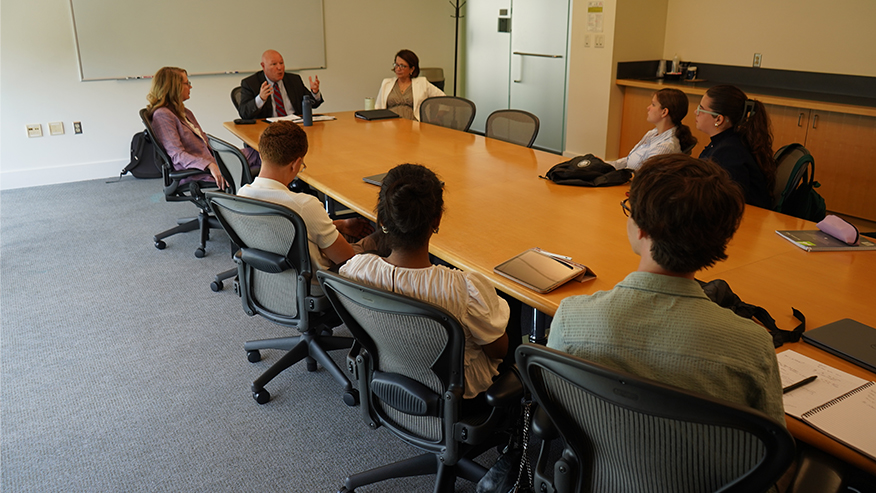
Justice Mark Massa explained that the U.S. legal system, like those in many countries with British legal traditions, allows opposing sides to present evidence and arguments before a verdict is reached.
The judges also discussed security threats, difficult decisions, workplace disagreements and rewarding aspects of their careers.
“Seeing real judges who carry real stories from the cases they oversee helps bridge the divide between the public and the judicial system,” Balkutė said. “Their personal stories and the weight of their decisions revealed a more human side of the judiciary.”
Many European participants were impressed by how much the American students knew about the U.S. Constitution and by its brevity and adaptability.
Chief Justice Rush praised the students for studying abroad at a young age and encouraged them to use their experiences to create positive change in the world.
Source: Anatoli Rapoport
YouTube Short: https://youtube.com/shorts/1fSb0gQmMns?is=j1gTEExMEruAHAx9
“Benjamin Franklin Transatlantic Fellowship brings together U.S. and European fellows” (2022)
About the BFTF
The Benjamin Franklin Transatlantic Fellowship is a program of the U.S. Department of State’s Bureau of Educational and Cultural Affairs, implemented by Purdue University. Established in 2006 to commemorate the 300th anniversary of Benjamin Franklin’s birth, the program promotes transatlantic understanding while exploring how young people consume and create information and why freedom of expression matters. Since 2013 the Purdue University College of Education has hosted the program.