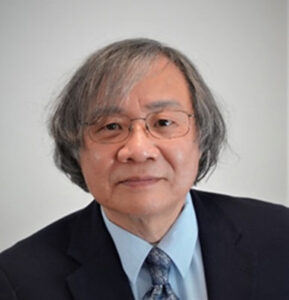
Hua Hua Chang
Charles R. Hicks Chair Professor, Professor of Statistics (Courtesy)
Educational Psychology and Research Methodology,
Educational Studies
Email:
chang606@purdue.edu
Phone:
(765) 494-9625
Address:
Steven C. Beering Hall of
Liberal Arts and Education
100 N. University Street
West Lafayette, Indiana 47907-2098
BRNG 5166
About
Education
- Ph.D. — Statistics, University of Illinois at Urbana-Champaign
- M.S. — Statistics, University of Illinois at Urbana-Champaign
- Diploma — Mathematics, East China Normal University, Shanghai, China
Career Experience
- 2021 – present
Professor of Statistics (Courtesy Appointment)
Department of Statistics, Purdue University - 2018 – present
Charles R. Hicks Chair Professor
Department of Educational Studies, Purdue University - 2013 – 2017
Director of Confucius Institute
University of Illinois at Urbana-Champaign - 2009 – 2018
Professors of Educational Psychology (67%), Psychology (33%) and Statistics (0%)
University of Illinois at Urbana-Champaign - 2005 – 2009
Associate Professors of Educational Psychology, Psychology, and Statistics
University of Illinois at Urbana-Champaign - 2001 – 2005
Associate Professor
Department of Educational Psychology
University of Texas, Austin, TX - 1999 – 2001
Senior Psychometrician and Director of Computerized Testing Technological Research
National Board of Medical Examiners, Philadelphia, PA - 1997 – 1998
Associate Professor
Department of Educational Psychology
The Chinese University of Hong Kong, Hong Kong, China - 1992 – 1999
Research Scientist and Associate Research Scientist
Division of Statistics and Psychometrics Research
Educational Testing Service, Princeton, NJ
Awards & Honors
- Samuel J. Messick Award for Distinguished Scientific Contributions (2024), American Psychological Association Division 5
- Award for Career Contributions to Educational Measurement (2021), National Council on Measurement in Education (NCME)
- Fulbright Specialist Award (2019), Colombia Fulbright Commission and U.S. Department of State
- Elected Fellow (2019), American Statistical Association
- E. F. Lindquist Award for Contributions to Research in Testing and Measurement (2017), Jointly awarded by AERA and ACT
- Robert Bohrer Lecture in Statistics (2014), University of Illinois at Urbana-Champaign
- Commencement Speaker (June 16, 2014), School of Educational Sciences, East China Normal University, Shanghai,
- Award for Significant Contribution to Educational Measurement and Research Methodology (2011), AERA Division D
- Elected Fellow, American Educational Research Association (2010)
- Annual Award for Contributions to Educational Measurement (2008), NCME
- Fulbright Senior Specialist Award (2005), Australian-American Fulbright Commission and U.S. Department of State
Research & Publications
Dr. Chang’s research spans both theoretical and applied domains, including Computerized Adaptive Testing (CAT), Cognitive Diagnosis, and Differential Item Functioning. Dr. Chang is also at the forefront of developing innovative web-based assessment tools to enhance personalized learning.
Dr. Chang is widely recognized for his pioneering contributions to CAT, where his innovative algorithms have significantly advanced the delivery of personalized assessments. In the early 2000s, as U.S. examinations shifted from traditional paper-pencil formats to CAT, the transition surfaced a host of complex technical challenges. Dr. Chang responded with statistically rigorous solutions that helped resolve these issues, playing a pivotal role in shaping industry standards and improving both the reliability and efficiency of adaptive testing systems.
By dynamically adjusting questions to match individual ability levels and pinpointing conceptual mastery, his algorithms laid the foundation for personalized learning pathways. More recently, his research has explored the intersection of CAT and generative AI, demonstrating how adaptive testing data can inform AI systems to produce learner feedback that is both concise and richly detailed.
Dr. Chang’s work has earned him accolades from leading professional organizations, including AERA, NCME, and APA. He is also honored as a fellow of both the American Educational Research Association (AERA) and the American Statistical Association (ASA).
Selected Publications
- Huang, J., Xin, Y., & Chang, H-H. (2025). The application of machine learning to educational
process data analysis: A systematic review. Education Sciences, 15(7), 888. https://doi.org/10.3390/educsci15070888. - Zhang, Y., Pereira, N., Arthur, D., Castillo-Hermosilla, H., Ozen, Z., & Chang, H-H. (2025). Using topic modeling in gifted education research: Drawing insights from open-ended survey responses. Gifted Child Quarterly.
- Le, V., Nissen, J., Tang, X., Zhang, Y., Mehrabi, A., Morphew, J., Chang, H-H., & Dusen, B (2025). Applying cognitive diagnostic models to mechanical concept inventories. Physical Review Physics Education Research, 21, 010103. https://doi.org/10.1103/PhysRevPhysEducRes.21.010103
- Wang, X., Yukiko, M., & Chang, H. H. (2024). Development and Techniques in Learner Model in Adaptive e-Learning System: A Systematic Review. Computers & Education, 105184.
- Zhu, Z. & Chang, H-H. (2024). Using MLP-F in three different aberrant behaviors in education. Journal of Educational and Behavioral Statistics.
- Le, V., Van Dusen, B., Nissen, J. M., Tang, X., Zhang, Y., Chang, H. H., & Morphew, J. W. (2024). Mechanics Cognitive Diagnostic: Mathematics skills tested in introductory physics courses. 2024 Physics Education Research Conference Proceedings, 243–249. https://doi.org/10.1119/perc.2024.pr.Le
- Chang, H-H. (2024). Harnessing AI for educational measurement: standards and emerging frontiers. Journal of Educational and Behavioral Statistics. In Press.
- Tang, X., Zheng, Y., Wu, T., Hau, KT, & Chang, H-H. (2024). Utilizing response times for item selection in on-the-fly multistage adaptive testing. Journal of Educational Measurement. DOI: 10.1111/jedm.12403
- Arthur, D. & Chang, H.H. (2023) DINA-BAG: A Bagging Algorithm for DINA Model Parameter Estimation in Small Samples. Journal of Educational and Behavioral Statistics. DOI: 10.3102/ 10769986231188442
- Li, X., Xu, H., Zhang, J., & Chang H-H. (2022). Deep reinforcement learning for adaptive learning system. Journal of Educational and Behavioral Statistics. DOI: 10.3102/10769986221129847.
- Du, Y., Zhang. S., & Chang, H-H. (2022). Compromised item detection: A Bayesian change-point perspective. British Journal of Mathematical and Statistical Psychology. DOI: 10.1111/ bmsp.12286
- Zhu, Z., Arthur, D., & Chang, H-H. (2022). A new person‐fit method based on machine learning in CDM. British Journal of Mathematical and Statistical Psychology. doi.org/10.1111/bmsp.12270.
- Wu, X., Wu, R., Zhang, Y., Arthur, & Chang, H-H. (2021). Research on construction method of learning paths and learning progressions based on cognitive diagnostic assessment. Assessment in Education: Principles, Policy & Practice. DOI:10.1080/0969594X.2021.1978387.
- Chang, H-H., Wang, C., & Zhang, S. (2021). Statistical applications in educational measurement. Annual Review of Statistics and Its Application. doi.org/10.1146/annurev-statistics-042720-104044
- Li, X., Xu, H., Zhang, J., & Chang, H-H. (2021). Optimal hierarchical learning path design with reinforcement learning. Applied Psychological measurement. DOI: 10.1177/0146621620947171
- Wu, X., Chang, H-H. (2021) A comparative study on cognitive diagnostic assessment of mathematical key competencies and learning trajectories — PISA data analysis based on 19, 454 students from 8 countries. Current Psychology. DOI:10.1007/s12144—020-01230-0
Courses Typically Taught
- EDPS 63200 — Computerized Adaptive Testing
- EDPS 63200 — Psychometrics with R Programming
- EDPS 63600 — Item Response Theory
- EDPS 53100 — Introduction To Measurement and Instrument Design
- EDPS 63500 — Psychometric Theory and Application
- EDPS 63200 — Seminar In Research Procedures in Education