Residential
Special Education/ Elementary Education Dual Licensure
Bachelor of Arts (BA)
Clinical Experience

Student Teaching
The Dual Licensure in Special Education (Mild Intervention) and Elementary Education program links courses with field experiences in partner school settings. Students are given opportunities to practice specialized skills to meet the individual needs of elementary students with and without disabilities in the classroom; develop Individualized Education Programs (IEPs); engage in data-driven decision making; and develop instructional, material, and environmental modifications to support access to general education curricula. The program leverages and extends competencies of elementary teachers to build effective instruction and support for all learners.
Courses

Plan of Study
A Dual Licensure major graduate is qualified to teach children in general education grades kindergarten through 6 (K-6) as well as special education grades prekindergarten through 12 (P-12) for students with mild support needs. Graduates are prepared to support leaners across a continuum of placements and to collaborate with a variety of professionals to meet the needs of students. The Dual Plan of Study outlines the required courses to complete the degree for licensure.
Blended and Online Teaching
The Technology Integration and Blended and Online Teaching (Ti-BOT) program is an integral component of the innovative new curriculum that offers a pathway for students to earn the Blended and Online Teaching License alongside their instructional licenses upon program completion.
To view a detailed Plan of Study for the BA in Special Education/Elementary Education Dual Licensure degree, please visit the Purdue University Course Catalog.
Admissions

Transfer Information
Purdue admits transfer students to individual majors. Transfer students must meet Purdue’s overall transfer criteria, as well as any major-specific requirements. Before you apply, check the closed programs page to confirm this major is open to transfer students. If it is, refer to the information below for major-specific transfer criteria.
Minimum GPA: 2.5
Start Your Giant Leap with One Small Step
Licensure

Licensure Information
Successful completion of the Purdue University Inclusion: Special Education/Elementary Education Program, Inclusion: Special Education/Elementary Education, BA, and the State of Indiana licensure requirements results in an Indiana initial instructional License in Mild Intervention (P-12), Elementary Generalist (K-6), Reading (K-6), Early Literacy (P-5), and Blended and Online Teaching (K-6). Contact the Office of Teacher Education and Licensure for additional information regarding Teacher Education and licensure requirements.
Additional opportunities

Certificate
Collaborative Leadership
Learn useful management skills like team-building, empowerment of others, and identifying and capitalizing on human resources to reach goals in this 9-credit hour program.
Student Research
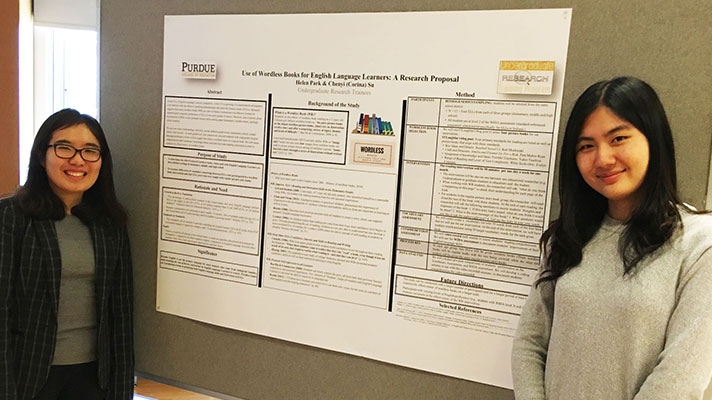
Undergraduate Research Training Program (URT)
Gain invaluable research experience through this unique program where you’ll work closely with an education faculty member and their research team.

Community
Honors College
Join a vibrant intellectual and residential community of young scholars when you apply to be part of the John Martinson Honors College.
Interested in this program?
Complete the form below to learn more.